

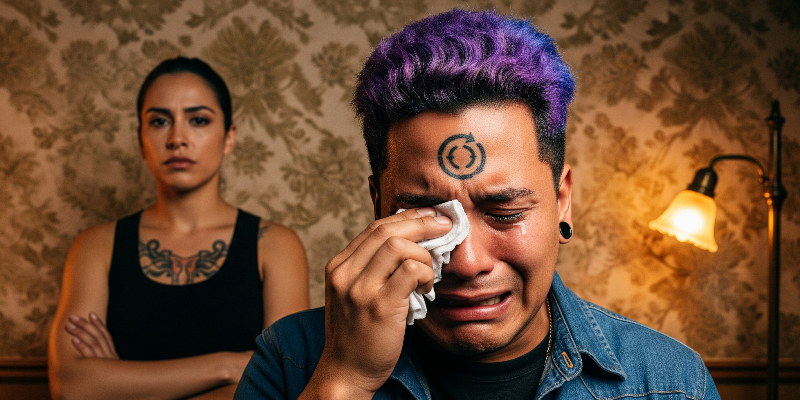
In our lives and in pop culture, we often encounter the idea that people grow up to date people like their parents, especially when at least one of their parents was... not so great.
The idea is common, but the explanation for it is lesser known.
In psychoanalytic theory, this is called "repetition compulsion."
It goes like this: When faced with insurmountable relational challenges during childhood (like when basic emotional needs are not met by parents), we unconsciously recreate this situation in adulthood. If mom was neglectful, we might seek out emotionally unavailable partners without even realizing it.
We don't do this for fun. It's not enjoyable. So, why do we do it?
We do it because we want (unconsciously) to prove to ourselves that we can now overcome the problems that were unsolvable in childhood.
The idea of being loved by someone who makes us feel unlovable can be intoxicating. If our parents never listened to us, we may fantasize about winning an argument with an inflexible, unaccountable partner. It would feel so empowering! For most people, resolving a problem that was unsolvable in childhood would feel like being on top of the world.
Of course, it rarely turns out that way.
The good news is: learning about repetition compulsion (like you're doing now) can help us identify relevant patterns in our past and present, allowing us to avoid continuing the pattern in the future.
Developing insight about repetition compulsion can enable a simple but powerful skill:
picking the right people.


